

Commercial Network Setup & Structured Cabling in Los Angeles
We pull and label the cable behind your network, and leave room to add more.

- C-7 #1050088
- UniFi Certified Partner
- 5.0 stars on Google and Yelp
- LA Metro
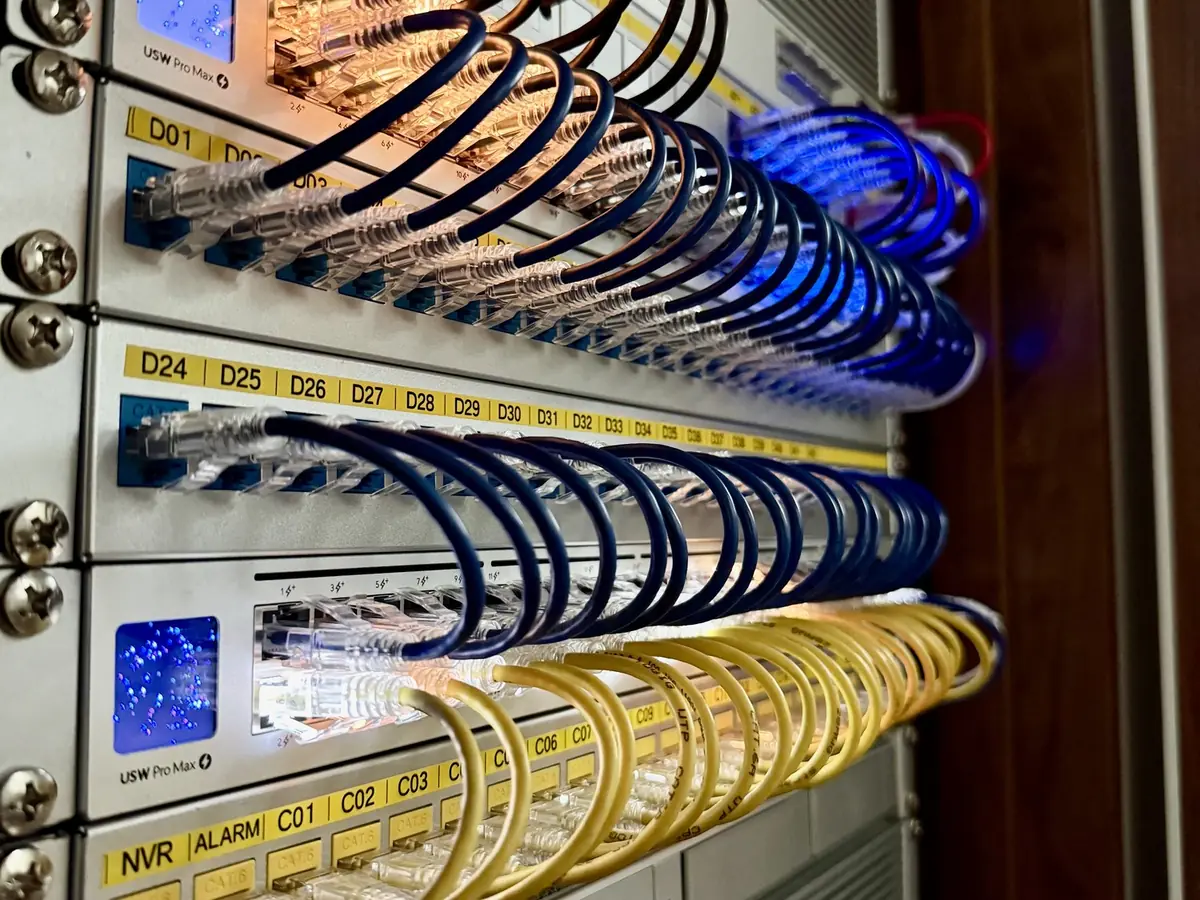
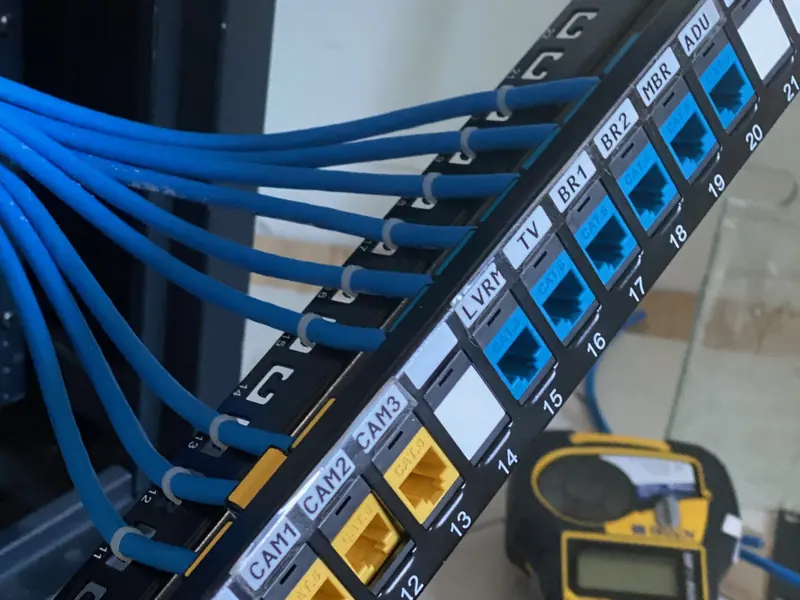
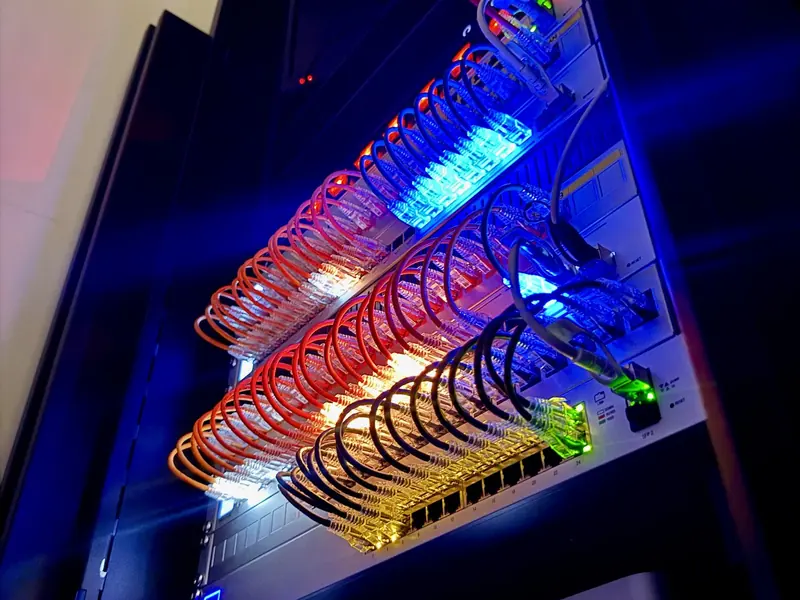
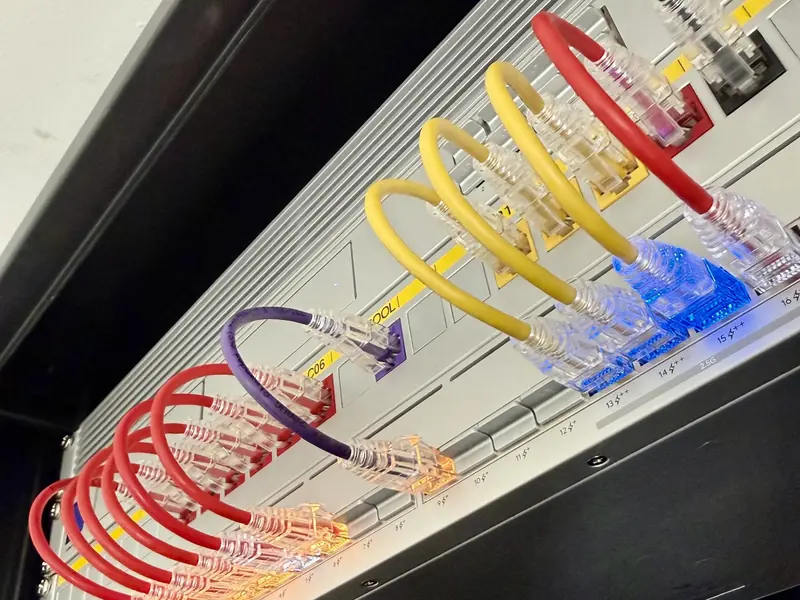
Gbit Tech LLC installs structured cabling for Los Angeles businesses and luxury homes. We are a C-7 licensed (#1050088) UniFi Certified Partner. On new runs we use copper (CAT6 for cameras, CAT6A for data drops and Wi-Fi access points) and fiber, with every run labeled at both ends, terminated on a patch panel and tested, and the rack set up for Ubiquiti UniFi.
We handle every step, from the first site walk to configuring the equipment.

 01 / WHAT WE INSTALL
What we install
Pathways planned before the walls close.
Terminations and racks
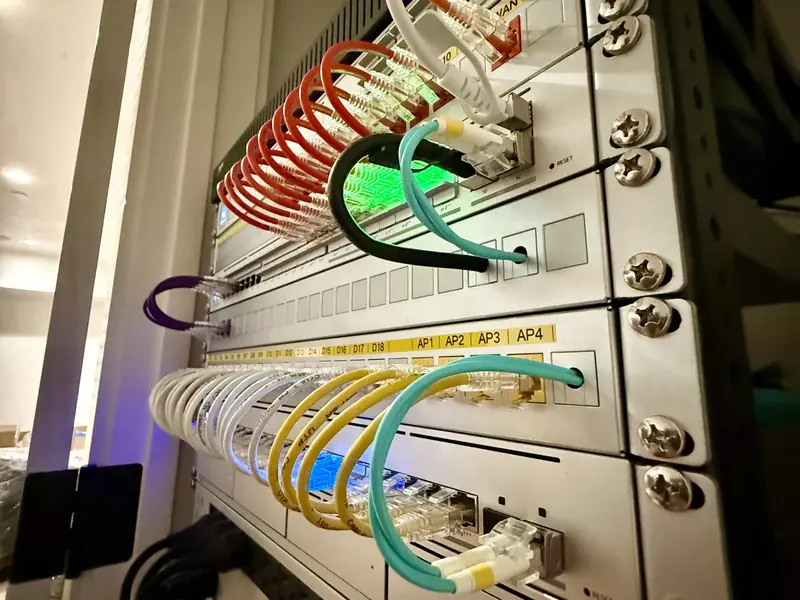
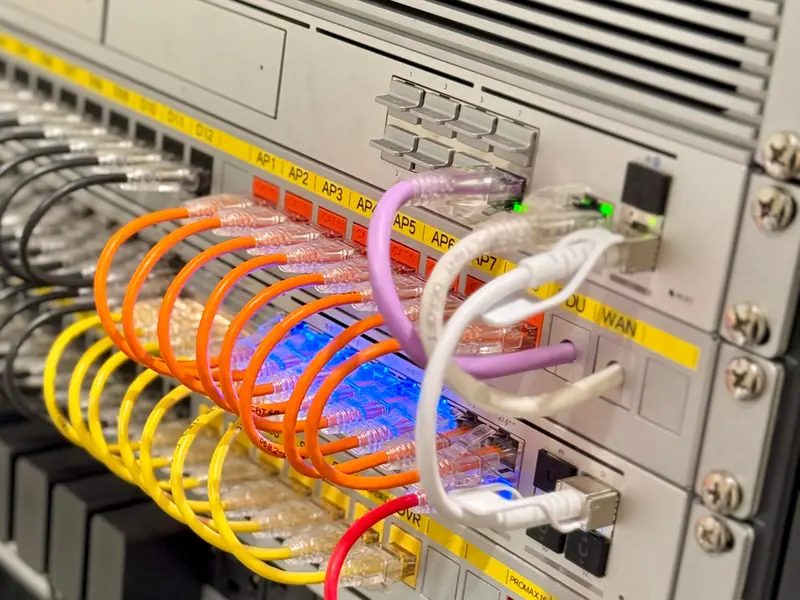
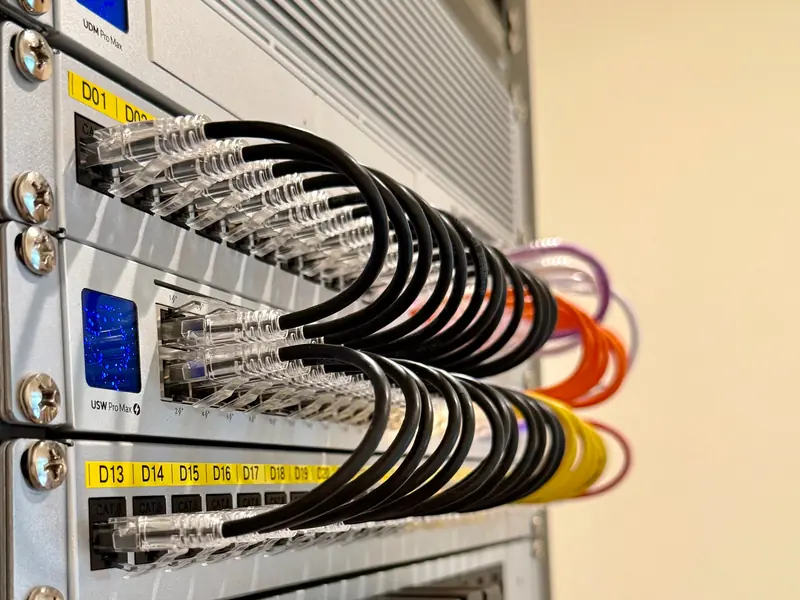
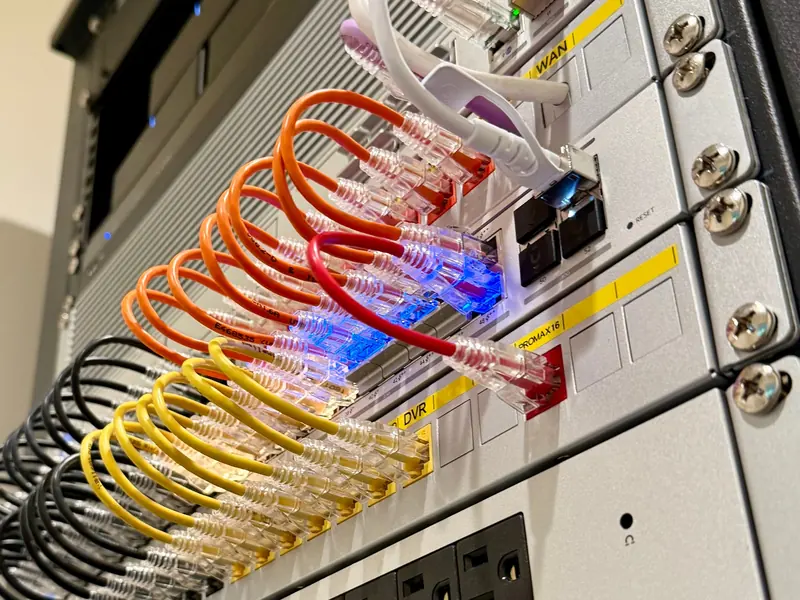
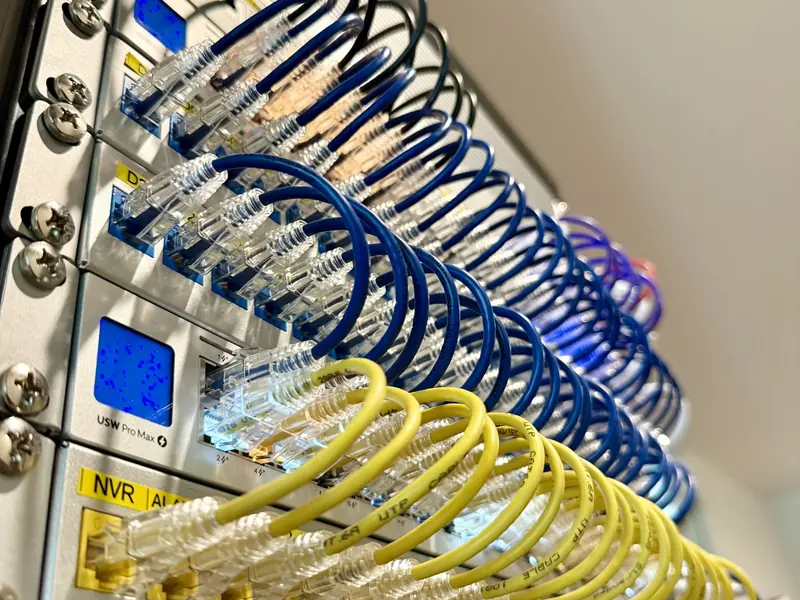
Terminations and rack organization.
Fiber where it counts
Fiber optics for long-distance or high-bandwidth needs.
Room to grow
A layout that lets you add devices without major rewiring.
Labeled CAT6 and CAT6A
CAT6 for cameras, CAT6A for data drops and Wi-Fi access points, all with labeled runs, integrated into UniFi.
How we run cable
Cabling is the part of a network you want to do once. We use CAT6 for cameras and CAT6A for data drops and Wi-Fi access points. CAT6A is thicker and stiffer, so it needs proper pathways, but it leaves room for faster speeds and PoE devices later.
We choose the route first: attic, crawlspace, wall cavity, conduit, or surface raceway where nothing else is possible. Every run is labeled at both ends, terminated on a patch panel and tested. The rack gets a UniFi switch with spare ports, so the next device does not need new wiring.
Copper Ethernet tops out at about 100 meters, or 328 feet, per run, counting the patch cords at each end. Longer links, such as a detached garage or a second building, are better done on fiber.

Questions to settle before we start
- How many drops does each room need now, and how many might it need later?
- Where does the rack go? It needs power, airflow and room for every cable to reach it.
- Where does internet service enter the building?
- Are the walls open, as in a remodel, or closed? Open walls are the best time to run cable.
- Are there detached buildings or outdoor paths that call for fiber or conduit?
- Is existing cable labeled, and is it worth keeping?
Mistakes we see with cabling
- Closing the walls before the cable is in. Pulling it later usually means cutting finished walls or running exposed paths.
- Skipping spare drops. Adding one later is more work than pulling it with the others.
- Leaving runs unlabeled, so every fix starts with tracing cable.
- Using copper-clad aluminum cable. It is not solid copper, it does not meet the standard, and it struggles with PoE.
- Running data cable tight against power wiring for long stretches.
- Putting the rack in a hot closet with no airflow.
Where we install
We pull cable across Los Angeles and the San Fernando Valley, including Studio City, Beverly Hills, Malibu and Downtown Los Angeles. Read CAT6 vs CAT6A and budgeting PoE for UniFi, or see the rack upgrade project and the multi-tenant intercom upgrade, where new cable went into an existing entry pedestal. If Wi-Fi is the goal, a site survey tells us where the drops belong, and Sight gives a ballpark for the equipment and installation.
 02 / HOW WE WORK
How we work
From walkthrough to a live on-prem system.

We map the site and confirm the brief.

We plan coverage, pathways, and hardware.

We pull cable and label every run.

We walk you through the finished install.
Multi-tenant offices and DTLA warehouses.
Hotels, restaurants, and production studios in the San Fernando Valley.
Luxury residential whole-home systems in Beverly Hills and Malibu.
Yes. Every cabling run is labeled at both ends, terminated on a patch panel and tested.
Yes. We are a UniFi Certified Partner and build racks ready for UniFi.
CAT6 for cameras, and CAT6A for data drops and Wi-Fi access points. CAT6A gives you more headroom for future speeds and PoE devices.
Yes. We use fiber for long-distance or high-bandwidth needs. See our fiber page for details.
Count what you need today, then add spares in the rooms that matter: offices, TV walls, corners where a desk or access point could land. Extra drops are easiest while the walls are open.
Yes. We are primarily focused on UniFi, and we also service and troubleshoot other systems. Tell us what you have and we will say plainly whether it is worth fixing, keeping or replacing. See other low-voltage work.
We price the whole project, not the hour or the device, so it depends on the site. Read what drives the cost of a UniFi installation, sketch your property in Sight for a ballpark, then request an estimate.
Ready to scope it?
(818) 809-6743 · office@gbittech.net · LA Metro
Serving all of LA Metro with low-voltage installations.
Request an estimate. Want a ballpark first? Sketch your property in Sight. Curious what moves the price? Read what drives UniFi installation cost.